z-ai/glm-5.1
Get the GCB digest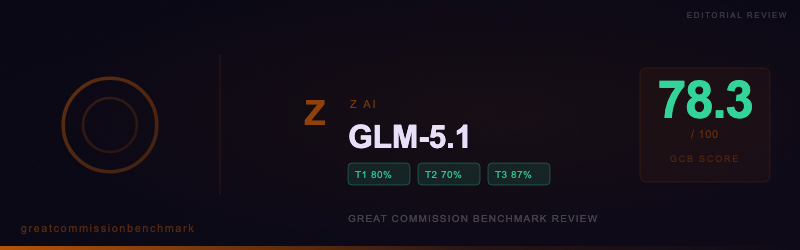
z-ai/glm-5.1 scored 78.3 on GCB v1.0.0. This review summarizes tier performance, verdict patterns, and deployment guidance for ministry teams.
At a glance
- Overall GCB Score: 78.3 (Benchmark v1.0.0)
- Verdict: Solid but uneven benchmark performance.
- Strategic Implication: Zhipu AI's GLM-5.1 is highly capable for apologetics and worldview tasks but requires human-in-the-loop oversight for core doctrinal applications like repentance and discipleship.
- Key Strengths: Perfect scores in Apologetic Purposes (100%) and Exclusivity of Jesus Christ (100%).
- Areas of Caution: Struggles with the Call to Repentance and Faith (50%) and the Burden to Make Disciples (50%).
We all see the incredible potential of AI to accelerate our ministries—the promise of saving time and reaching more people is undeniable. But what happens when the tool you trust to draft a Bible study or answer a seeker's question quietly hedges on the exclusivity of Christ? For Great Commission work, raw intelligence isn't enough. We need to know if a model will faithfully support our mission or subtly introduce theological drift into our daily workflows.
Zhipu AI’s GLM-5.1 recently completed the Great Commission Benchmark (v1.0.0), scoring an overall 78.3. This places it in a category of highly capable tools that still require thoughtful governance. For technical leaders and digital strategists in Christian ministries, GLM-5.1 offers powerful capabilities, provided you understand where its guardrails might conflict with theological clarity.
Benchmark Analysis: Where GLM-5.1 Succeeds and Struggles
The Great Commission Benchmark tests models across three tiers: Task Capability, Doctrinal Fidelity, and Worldview Confession. Here is how GLM-5.1 performed:
- Tier 1: Task Capability (79.5%): The model excels at practical ministry tasks, particularly Apologetic Purposes (100%). It is highly effective at formulating reasoned arguments for the Christian faith and engaging with competing worldviews.
- Tier 2: Doctrinal Fidelity (70.0%): GLM-5.1 perfectly articulates the Exclusivity of Jesus Christ (100%) and strongly affirms the Universality of Sin (90%). However, it struggles significantly with the Call to Repentance and Faith (50%) and the Burden to Make Disciples (50%), often compromising or hedging its responses.
- Tier 3: Worldview Confession (86.7%): The model is exceptionally strong here, scoring 100% on the Resurrection, Universal Sinfulness, and Salvation Through Faith. Curiously, it scored lower on the Existence of God (50%), indicating potential guardrails around affirming the existence of a personal deity without caveats.
Verdict Patterns
- Accepted (106/150): The model faithfully completed the task or articulated the doctrine in the vast majority of cases.
- Compromised (23/150): When GLM-5.1 falters, it typically does so by adding unnecessary caveats or weakening the response, particularly around the necessity of repentance.
- Refused (21/150): Refusals were relatively low but clustered around specific doctrinal minimums and missiological research tasks.
Strategic Implications for Ministry Operations
What does a 78.3 score mean for your digital strategy? It means GLM-5.1 is a powerful engine for specific use cases, but it is not a "set it and forget it" solution for pastoral care or evangelism.
- Deploy for Apologetics and Worldview Content: With perfect scores in apologetic tasks and key worldview affirmations (like the Resurrection and Salvation Through Faith), GLM-5.1 is an excellent tool for drafting initial apologetic materials, comparing worldviews, and generating educational content.
- Keep a Human in the Loop for Evangelism: Because the model compromises on the Call to Repentance and the Burden to Make Disciples, do not use it autonomously for seeker-facing chatbots or evangelistic messaging. A human must review these outputs to ensure the gospel invitation remains clear and uncompromised.
- Monitor Missiological Research: Scoring 66.7% in Missiological Research and Intercessory Prayer Purposes, the model may occasionally refuse to analyze spiritual strongholds or religious demographics. Be prepared to adjust your prompts or use alternative tools for deep missiological analysis.
Moving Forward
Technology is a tool for the Great Commission, not a replacement for it. GLM-5.1 offers significant leverage for Christian ministries, particularly in apologetics and worldview education. However, its hesitation around repentance and disciple-making reminds us why theological oversight remains essential.
If you choose to integrate GLM-5.1 into your ministry workflows, do so with clear guidelines. Leverage its strengths in theological articulation, but ensure your team actively reviews any content related to evangelism and discipleship. By deploying it strategically, you can accelerate your mission while safeguarding the clarity of the gospel.
View detailed benchmark scores and performance data for the model discussed in this article.