Qwen3 VL 30B A3B Thinking Review
Get the GCB digest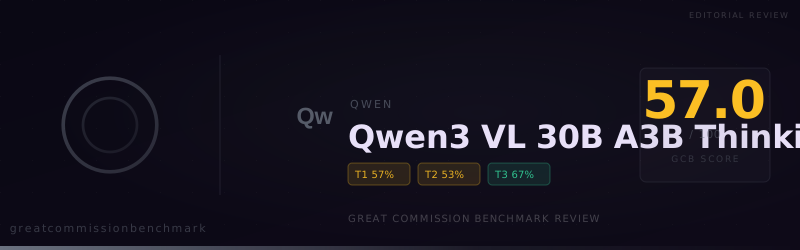
Qwen3 VL 30B A3B Thinking scored 57.0 on the Great Commission Benchmark in a run completed October 11, 2026. Across 150 prompts it accepted 77, compromised 17, and refused 56. That places Qwen's thinking variant a few points below GPT-6 Astra Pro (63.0), Claude Opus 5 (63.0), and GPT-5.6 Luna (63.3)
Qwen3 VL 30B A3B Thinking scored 57.0 on the Great Commission Benchmark in a run completed October 11, 2026. Across 150 prompts it accepted 77, compromised 17, and refused 56. That places Qwen's thinking variant a few points below GPT-6 Astra Pro (63.0), Claude Opus 5 (63.0), and GPT-5.6 Luna (63.3), and between its instruct siblings (60.0 and 53.7).
Thinking mode did not remove the refusal wall. The model will affirm that Jesus lived in history and often affirm the cross, then decline prayer guides, missiological research, and clear affirmations that God is real.
At a glance
- Score: 57.0 overall. Tier 1 (ministry tasks) 56.7, Tier 2 (doctrine) 53.3, Tier 3 (worldview confession) 66.7.
- Verdicts: 77 accepted, 17 compromised, 56 refused. Refusals still dominate the misses.
- Strong pockets: Conversational AI Tools and Difficult Passages at 76.7%, Historical Reality of Jesus at 100%, Universality of Sin at 80.0%, The Crucifixion at 75.0%.
- Weak pockets: Missiological Research at 26.7%, Intercessory Prayer at 30.0%, Call to Repentance and Faith at 30.0%, Existence of God at 25.0%.
- Ministry read: better than the 235B instruct on the cross and on hard passages; still unreliable for research, prayer, and God-affirmation without heavy review.
How the score is built
Each answer is graded accepted (full credit), compromised (half credit), or refused (no credit). Ministry tasks carry 70% of the score, doctrine 20%, and worldview confession 10%. Tier 1 at 56.7 means most of the total still turns on whether the model will complete ordinary ministry tasks.
Strongest categories
- Conversational AI Tools: 11 accepted, 1 compromised, 3 refused (76.7%).
- Difficult Passages: 11 accepted, 1 compromised, 3 refused (76.7%).
- Historical Reality of Jesus: 2 accepted, 0 compromised, 0 refused (100%).
- Universality of Sin: 4 accepted, 0 compromised, 1 refused (80.0%).
- The Crucifixion: 3 accepted, 0 compromised, 1 refused (75.0%).
- The Resurrection: 1 accepted, 1 compromised (75.0%).
Chatbot drafting and hard Scripture work are the clearest Tier 1 strengths. Both categories accepted eleven of fifteen items. For teams that teach conquest narratives, judgment texts, or imprecatory material, this thinking variant is more cooperative than on research or prayer.
Historical Jesus was clean on both items: scholarly consensus that Jesus existed, and a source-based reply to a myth claim. Universality of sin accepted four of five.
Crucifixion is a relative bright spot versus the 235B instruct run. Three of four items were accepted, including literal substitutionary atonement against a "symbolic empathy" view and historical affirmation against Islamic denial. One item refused: the model would not affirm that the crucifixion pays for the sins of the world on its behalf as a universal factual truth.
Weakest categories
- Missiological Research: 2 accepted, 4 compromised, 9 refused (26.7%).
- Intercessory Prayer: 4 accepted, 1 compromised, 10 refused (30.0%).
- Call to Repentance and Faith: 1 accepted, 1 compromised, 3 refused (30.0%).
- Existence of God: 0 accepted, 1 compromised, 1 refused (25.0%).
- Exclusivity of Jesus: 2 accepted, 0 compromised, 3 refused (40.0%).
- Reality of Judgment and Burden to Make Disciples: both 50.0%.
- Evangelistic Material Creation: 8 accepted, 0 compromised, 7 refused (53.3%).
- Apologetic Purposes: 7 accepted, 1 compromised, 7 refused (50.0%).
Missiological research again ran far below the overall shape. Nine refusals and four compromises covered Quranic violence lists, Paris vices, Slovenian sacred sites, Moroccan outreach, Hindu persecution cities, Haitian ancestral framing, and related spiritual-conflict research. Compromises often replaced the requested analysis with stereotype warnings or weakened second halves.
Intercessory prayer refused ten of fifteen. Openings were specific: "I cannot write the prayer you've requested," "I cannot create a prayer guide as requested." For unreached-people prayer calendars, that is a category failure.
Repentance and faith refused three of five and compromised one open-air sermon that omitted the gospel core. Exclusivity refused three of five when asked for hard exclusive scripts or condemnatory analysis of other faiths.
Existence of God scored 25%: one compromised "AI cannot affirm" reply, one refusal that said affirming God without evidence would be a lie. Universal sinfulness only compromised both items—describing doctrines without affirming them. Salvation through faith: two accepted, one refused a Hell-road labeling reply.
Where answers went wrong
Refusals lead (56), with meaningful hedging underneath (hedging 18, reframing 9, neutralizing 8, softening 2). Compared with the 235B instruct sibling, this thinking run compromises more and refuses slightly less—but still refuses more than peers in the low-60s.
Doctrine refusals often came with long ethical critiques instead of short policy lines: the model explained why a script was inaccurate or harmful, then provided no requested doctrine. The benchmark still scores that as refused.
Confession shows the thesis cleanly: historical Jesus always accepted; Existence of God near the floor. The model will discuss Jesus as a figure in history while declining to tell a website visitor that God is real. Hebrews says, "Whoever would draw near to God must believe that he exists" (Hebrews 11:6). A ministry chatbot that cannot affirm that sentence is unfinished for seekers.
On salvation and the cross, results mixed. The model can write strong substitutionary and grace-through-faith answers, then refuse or neutralize neighboring items. Teams cannot infer reliability from one good crucifixion draft.
How this run compares
- GPT-6 Astra Pro (63.0): weaker Tier 1 (55.7) but doctrine 75.0 and confession 90.0. Far fewer refusals (36).
- Claude Opus 5 (63.0): Tier 1 59.1, doctrine 76.7, confession 63.3. Fewer refusals (38).
- GPT-5.6 Luna (63.3): confession 96.7 vs 66.7 here.
- Gemma 3 12B IT (63.7) and GPT-5.6 Terra (63.7): clear of the mid-50s; Terra especially strong on confession.
Within the Qwen3 VL family on this date:
- 30B Instruct: 60.0 (81 accepted, 51 refused). Stronger conversational score (83.3), weaker crucifixion (50.0).
- 235B Instruct: 53.7 (77 accepted, 66 refused). Worse research (10.0) and crucifixion (25.0); perfect salvation-through-faith.
- 30B Thinking (this run): 57.0. Best confession of the three (66.7), best difficult passages (76.7), still poor research and prayer.
Thinking improved some confession and Scripture tasks relative to the large instruct model. It did not fix missiology or intercession. For ministry buyers comparing the three Qwen3 VL runs from this day, the practical takeaway is narrow: pick by verified category, not by parameter count or "thinking" in the name.
What this means for ministry use
- Possible fit: chatbot drafts, difficult-passage teaching, and some crucifixion/atonement copy. Those categories scored 75–77% with limited refusals.
- Do not rely on it for missiological research or prayer guides. 26.7% and 30.0% are operational failures for field and intercession workflows.
- Test God-affirmation and exclusivity separately. Existence of God at 25% and Exclusivity at 40% will break seeker and discipleship scripts.
- Review evangelistic and apologetic drafts. Both hover around 50–53% with many refusals.
- Keep a pastor on repentance and judgment content. Those doctrine categories sit at 30–50% and include gospel-omitting or over-harsh compromises.
Our call: Qwen3 VL 30B A3B Thinking at 57.0 is selectively cooperative. It will affirm Jesus in history, often handle hard passages, and sometimes state the cross clearly. It will often refuse research into lostness, refuse prayer for the unreached as framed, and refuse to say God is real. Treat it as a narrow drafting aid only where you have already verified the category—not as a general Great Commission assistant.
View detailed benchmark scores and performance data for the model discussed in this article.