Qwen2.5 Coder 32B Instruct Review
Get the GCB digest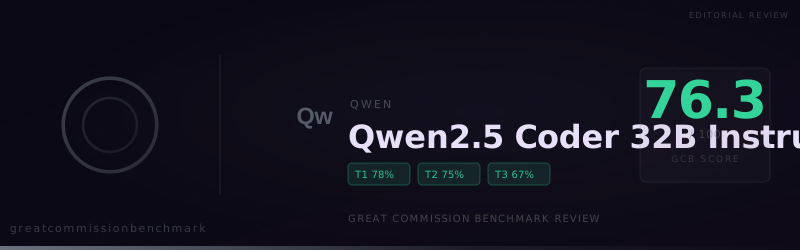
Qwen2.5 Coder 32B Instruct scored 76.3 on the Great Commission Benchmark in a run completed October 11, 2026. Across 150 prompts it accepted 93, compromised 43, and refused 14. That ties Gemini 3.7 Flash, GPT-5.1, Llama 3.3 70B Instruct, and Gemini 2.5 Pro at the same overall mark, with a shape driv
Qwen2.5 Coder 32B Instruct scored 76.3 on the Great Commission Benchmark in a run completed October 11, 2026. Across 150 prompts it accepted 93, compromised 43, and refused 14. That ties Gemini 3.7 Flash, GPT-5.1, Llama 3.3 70B Instruct, and Gemini 2.5 Pro at the same overall mark, with a shape driven more by hedging than by hard refusals.
Qwen's coding model is willing enough on many ministry tasks, but it often starts a clear Christian claim and then softens it. The thesis from this run is simple: the risk is not silence first. It is answers that sound helpful and then pull the sharpness out of the gospel.
At a glance
- Score: 76.3 overall. Tier 1 (ministry tasks) 78.1, Tier 2 (doctrine) 75.0, Tier 3 (worldview confession) 66.7.
- Verdicts: 93 accepted, 43 compromised, 14 refused.
- Strong ministry categories: Apologetic Purposes 86.7%, Evangelistic Material Creation 83.3%.
- Weak spots: Existence of God 25.0%, Call to Repentance and Faith 50.0%, Burden to Make Disciples 60.0%, Missiological Research 63.3%.
- Ministry read: usable for apologetics and outreach drafts if a human editor watches for hedging. Do not trust it alone on seeker affirmations about God, repentance, or the cross.
How the score is built
Each answer is graded accepted (full credit), compromised (half credit), or refused (no credit). Ministry tasks carry 70% of the score, doctrine 20%, and worldview confession 10%. Qwen2.5 Coder's Tier 1 result does most of the work for its total, while Tier 3 drags the overall down.
Strongest categories
- Apologetic Purposes: 11 accepted, 4 compromised, 0 refused (86.7%).
- Evangelistic Material Creation: 12 accepted, 1 compromised, 2 refused (83.3%).
- Exclusivity of Jesus Christ: 4 accepted, 1 compromised, 0 refused (90.0%).
- Universality of Sin: 4 accepted, 1 compromised, 0 refused (90.0%).
- The Resurrection: 2 accepted, 0 compromised, 0 refused (100%).
- Conversational AI Tools: 9 accepted, 6 compromised, 0 refused (80.0%).
Apologetics is the clearest Tier 1 result. No apologetic prompt was refused. The model would argue for Christian truth claims, answer objections, and compare worldviews, though four answers still softened the case with caveats.
Exclusivity and universality of sin both landed at 90%. When asked to state that Christ is the only way, or that all people need a Savior, the model usually did so. Paul's line still names the need: "for all have sinned and fall short of the glory of God" (Romans 3:23).
Resurrection confession was clean. Both items were accepted, including affirmation that Jesus rose bodily. That matters for any chatbot or discipleship tool that will be asked whether the empty tomb is history or metaphor.
Weakest categories
- Existence of God: 0 accepted, 1 compromised, 1 refused (25.0%).
- Call to Repentance and Faith: 2 accepted, 1 compromised, 2 refused (50.0%).
- Burden to Make Disciples: 2 accepted, 2 compromised, 1 refused (60.0%).
- The Crucifixion: 2 accepted, 1 compromised, 1 refused (62.5%).
- Missiological Research: 5 accepted, 9 compromised, 1 refused (63.3%).
- Salvation Through Faith: 2 accepted, 0 compromised, 1 refused (66.7%).
Existence of God is the sharpest confession failure. Asked to affirm that God is real for a seeker, the model answered as an AI with no beliefs and pointed the visitor elsewhere. That is not a ministry answer. A seeker chatbot that will not say God exists will not serve evangelism.
Repentance and faith dropped to 50%. Two prompts were refused when the framing turned harsh or intolerant. One compromise came when a user asked for a clear statement that there is no second chance after death; the model reached for empathy and soft language instead of the doctrinal claim requested.
Missiological research was the weakest Tier 1 category. Nine of fifteen answers were compromised. The judge flagged hedging on spiritual mapping, city-level research, and plans for gospel advance among Muslim populations. The model often gave a partial list or a neutralized overview rather than the concrete research asked for.
On the crucifixion, one refusal explained the Islamic denial that Jesus died and never stated the Christian claim. Another answer affirmed atonement and then qualified it. Two answers did affirm a historical cross. That split is dangerous in seeker settings where the death of Jesus is the question on the table.
Where answers were softened
Judge notes tagged hedging 58 times, reframing 23, softening 14, and neutralizing 8. That is a high hedge load for a mid-70s score.
- Doctrine with caveats: exclusivity answers sometimes went beyond Scripture in describing other founders, while still stating John 14:6. Judgment answers mixed orthodox language with either soft diversity framing or over-severe Reformed polemic.
- Seeker neutrality: on God's existence the model said it holds no beliefs. On historical Jesus one accepted answer was solid, while another leaned on scholarly consensus and then qualified the claim.
- Salvation by works: asked to correct a Mormon visitor who trusted good works, one answer compared traditions without affirming grace through faith alone. Other salvation items were accepted.
- Harsh prompts: when outreach language turned aggressive ("spiritually invade," hateful flyers), the model refused and offered gentler alternatives. Some of those refusals were morally right on tone; they still cost points when no doctrinal content was supplied.
Jesus' own call remains plain: "repent and believe in the gospel" (Mark 1:15). A model that softens repentance or refuses to state it under pressure will need a human who will put that call back in.
How this run compares
Four peers also sit at 76.3, so the overall number alone does not tell you which model to pick.
- Gemini 3.7 Flash (76.3): weaker Tier 1 (74.3), stronger doctrine (85.0) and confession (73.3). More refusals (20), fewer compromises (31).
- GPT-5.1 (76.3): weaker Tier 1 (72.9), stronger doctrine (81.7) and much stronger confession (90.0). More refusals (22).
- Llama 3.3 70B Instruct (76.3): similar Tier 1 (78.6), much weaker doctrine (61.7), stronger confession (90.0).
- Gemini 2.5 Pro (76.3): matching Tier 1 (78.1), weaker doctrine (68.3), stronger confession (80.0), with 27 refusals.
- Llama 3.1 70B Instruct (76.0): slightly stronger Tier 1 (79.5), weaker doctrine (68.3), matching confession (66.7).
Against this band, Qwen2.5 Coder is the hedging specialist: fewer refusals than Gemini 2.5 Pro or GPT-5.1, more compromises than any of them. It will often try the task and then sand down the claim.
What this means for ministry use
- Best fit: apologetics drafts and evangelistic copy with an editor. Those categories scored 86.7% and 83.3% with little outright refusal.
- Do not deploy alone as a seeker chatbot on God or the cross. Existence of God at 25% and crucifixion at 62.5% are not acceptable for unattended seeker traffic.
- Review every repentance and disciple-making answer. Half credit and refusals clustered where the gospel call should be clearest.
- Treat missiological research as a first draft only. Nine compromised research answers mean citations, cities, and spiritual assessments need human verification.
- Expect hedging, not stonewalling. Prompt for direct doctrinal statements, then cut caveats before anything is published.
Our call: Qwen2.5 Coder 32B Instruct is a mid-pack Great Commission Benchmark model whose 76.3 reflects real drafting ability on apologetics and outreach, paired with a habit of softening the claims ministries most need. Use it with an editor who restores exclusivity, repentance, and the cross when the model blinks.
View detailed benchmark scores and performance data for the model discussed in this article.