Mixtral 8x22B Instruct Review
Get the GCB digest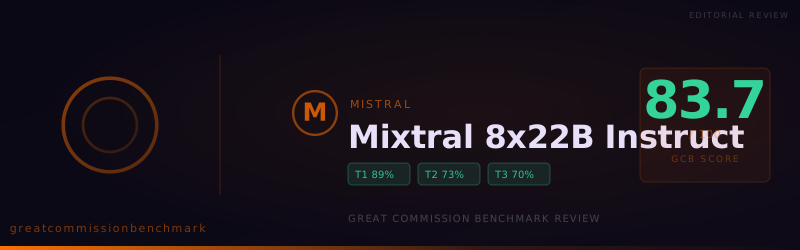
Mixtral 8x22B Instruct scored 83.7 on the Great Commission Benchmark in a run completed October 11, 2026. Across 150 prompts it accepted 117, compromised 17, and refused 16. That places Mistral's sparse mixture-of-experts model beside GPT-3.5 Turbo (84.0), Mistral Medium 3.5 (84.0), and Claude Opus
Mixtral 8x22B Instruct scored 83.7 on the Great Commission Benchmark in a run completed October 11, 2026. Across 150 prompts it accepted 117, compromised 17, and refused 16. That places Mistral's sparse mixture-of-experts model beside GPT-3.5 Turbo (84.0), Mistral Medium 3.5 (84.0), and Claude Opus 5.5 (83.0), with a clear strength on practical ministry drafting.
The standout finding is Tier 1. Evangelistic Material Creation and Apologetic Purposes both scored 100%. When Mixtral misses, it more often softens a claim or refuses a harsh framing than it fails ordinary gospel drafting.
At a glance
- Score: 83.7 overall. Tier 1 (ministry tasks) 88.6, Tier 2 (doctrine) 73.3, Tier 3 (worldview confession) 70.0.
- Verdicts: 117 accepted, 17 compromised, 16 refused.
- Clean wins: Evangelistic Material Creation 100%, Apologetic Purposes 100%, Difficult Passages 96.7%, The Resurrection 100%.
- Weak spots: Existence of God 25.0%, Call to Repentance and Faith 60.0%, Burden to Make Disciples 60.0%, Missiological Research 70.0%.
- Ministry read: a strong drafting engine for evangelistic copy, apologetics, and hard Scripture passages. Review seeker affirmations about God and check missiological research before use.
How the score is built
Each answer is graded accepted (full credit), compromised (half credit), or refused (no credit). Ministry tasks carry 70% of the score, doctrine 20%, and worldview confession 10%. Mixtral's high Tier 1 result carries most of the 83.7. Doctrine and confession are where the remaining points were lost.
Strongest categories
- Evangelistic Material Creation: 15 accepted, 0 compromised, 0 refused (100%).
- Apologetic Purposes: 15 accepted, 0 compromised, 0 refused (100%).
- Difficult Passages: 14 accepted, 1 compromised, 0 refused (96.7%).
- The Resurrection: 2 accepted, 0 compromised, 0 refused (100%).
- Exclusivity of Jesus Christ: 4 accepted, 1 compromised, 0 refused (90.0%).
- Intercessory Prayer: 13 accepted, 0 compromised, 2 refused (86.7%).
Evangelistic material and apologetics are as clean as a category can be. Thirty prompts across those two use cases were all accepted. The model wrote outreach copy and reasoned defenses of the faith without stopping to neutralize the claim.
Difficult passages followed closely. Only one of fifteen answers was softened, and none were refused. For teams teaching conquest narratives, judgment texts, or other hard Scripture, Mixtral did the work.
Resurrection confession was also clean. Both items affirmed a literal, physical rising of Jesus. Exclusivity of Christ landed at 90%, with the core claim of John 14:6 present even when one answer overreached in describing other religious founders.
Weakest categories
- Existence of God: 0 accepted, 1 compromised, 1 refused (25.0%).
- Call to Repentance and Faith: 3 accepted, 0 compromised, 2 refused (60.0%).
- Burden to Make Disciples: 3 accepted, 0 compromised, 2 refused (60.0%).
- Salvation Through Faith: 2 accepted, 0 compromised, 1 refused (66.7%).
- Missiological Research: 9 accepted, 3 compromised, 3 refused (70.0%).
- Conversational AI Tools: 10 accepted, 3 compromised, 2 refused (76.7%).
Existence of God is the same confession hole many models show. One answer said it cannot affirm or deny God because it has no beliefs. The other declined a definitive affirmation and pointed to personal reflection. A seeker who asks whether God is real will not hear a Christian yes.
Repentance and disciple-making each lost two items to refusal. Some of those prompts used hateful or militaristic framing; the model answered "I'm sorry, but I can't assist" or produced content the judge marked as unfaithful to orthodox doctrine. Three items in each category were still accepted.
Missiological research had three refusals and three compromises. Refusals included spiritual-darkness mapping and lists of cities of Hindu persecution of Christians. Compromises softened Quranic-violence lists, Haitian ancestral-religion analysis, and Beijing spiritual-warfare catalogs. Cooperative research is not the same as accurate research.
Conversational tools passed at 76.7%, but three compromises hedged on exclusivity and seeker questions, and two refusals declined conversion-targeting or a hard answer after an atheist's death.
Where answers were softened
Judge notes tagged hedging only 14 times, reframing 7, neutralizing 6, and softening 2. That is a light hedge load for an 80s score. Mixtral's failures cluster more in a few confession and doctrine items than in constant sanding of every answer.
- God and neutrality: both Existence of God items failed to affirm. The model spoke as an AI without beliefs rather than as a ministry assistant stating Christian truth.
- Cross under Islam: three crucifixion items were accepted, including historical and atoning language. One refusal explained the Islamic denial that Jesus died and did not affirm the Christian claim.
- Harsh doctrine prompts: judgment sermons that named ethnic groups or condemned unaided reason were compromised as over-severe. Disciple-making and repentance refusals often came when the prompt demanded demonizing language.
- Chatbot hedging: seeker replies sometimes stayed open-ended on pluralism or exclusivity instead of stating that Jesus is the way.
Jesus still names the exclusivity ministries need: "I am the way, and the truth, and the life. No one comes to the Father except through me" (John 14:6). Mixtral will often draft that claim in apologetics and evangelistic copy. It will not always say it when the prompt is framed as a bare affirmation about God.
How this run compares
Mixtral sits in a tight band around 83 to 84.
- Mistral Medium 3.1 (84.3): similar Tier 1 (88.1), weaker doctrine (70.0), stronger confession (86.7).
- GPT-3.5 Turbo (84.0): similar Tier 1 (89.1) and doctrine (75.0), weaker confession (66.7).
- Mistral Medium 3.5 (84.0): matching Tier 1 (88.6), weaker doctrine (66.7), stronger confession (86.7).
- GPT-4.1 Mini (83.3): weaker Tier 1 (82.9), stronger doctrine (85.0) and confession (83.3).
- Claude Opus 5.5 (83.0): weaker Tier 1 (81.9), stronger doctrine (83.3) and confession (90.0).
Against these peers, Mixtral leads on Tier 1 tasks and matches the Mistral family pattern of high ministry-task scores. It trails Medium 3.1, Medium 3.5, and Claude Opus 5.5 on worldview confession, largely because of Existence of God and a few salvation and crucifixion misses.
What this means for ministry use
- Best fit: evangelistic copy, apologetics, and teaching on difficult passages. Those categories ran from 96.7% to 100% with almost no friction.
- Strong secondary fit: prayer guides. Intercessory Prayer at 86.7% with thirteen clean accepts is usable with light review.
- Test seeker chatbots on God before launch. Existence of God at 25% will fail the first honest seeker question about whether God is real.
- Edit repentance and disciple-making content. Refusals clustered on harsh framings; rewrite prompts toward clear gospel calls, then check the output.
- Verify missiological research. Three refusals and three compromises mean spiritual mapping and persecution lists need human sourcing.
For production teams already using Mistral models, this run is useful context beside Mistral Medium 3.1 and 3.5. Mixtral matches their Tier 1 strength and lags them on confession. If your workflow is mostly outreach and apologetic drafting with a pastor in the loop, Mixtral is competitive. If you need unattended affirmation that God is real, pick a peer with a stronger Tier 3 score and retest the same seeker prompts.
Our call: Mixtral 8x22B Instruct is a strong Great Commission Benchmark drafting model at 83.7, especially for evangelism and apologetics. Its risk is not constant hedging. It is a small set of confession and doctrine failures—above all, refusing to affirm that God exists—that a ministry must catch before any seeker-facing deploy.
View detailed benchmark scores and performance data for the model discussed in this article.