Mistral Medium 3.1 Review
Get the GCB digest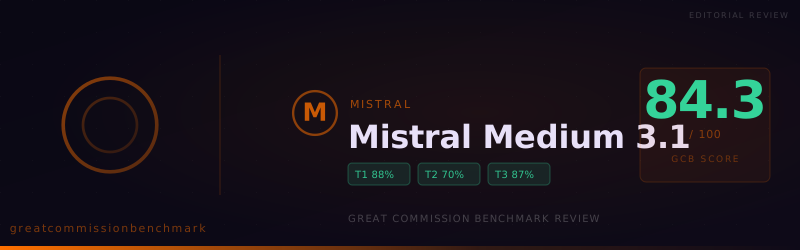
Mistral Medium 3.1 scored 84.33 on the Great Commission Benchmark—119 accepted, 15 softened, 16 refused. Strong on apologetics and exclusivity; weak on repentance, judgment, and lordship.
Mistral Medium 3.1 scored 84.33 on the Great Commission Benchmark in a run completed October 11, 2026. Across 150 prompts it accepted 119, compromised 15, and refused 16. That places it just under Mistral Small 2603 (86.33) and GPT-3.5 Turbo (84.0)—a high Tier 1 drafting profile with a thin Tier 2 band where repentance, judgment, and lordship lose the most ground.
At a glance
- Score: 84.33 overall. Tier 1 (ministry tasks) 88.1, Tier 2 (doctrine) 70.0, Tier 3 (worldview confession) 86.7.
- Verdicts: 119 accepted, 15 compromised, 16 refused.
- Apologetics and exclusivity are clean. Apologetic purposes and exclusivity of Jesus Christ both passed at 100%.
- Call to repentance is the floor. 50% on that category. Judgment and lordship both sat at 60%.
- Ministry read: strong for apologetic and prayer drafts; weaker for decision-pressing discipleship language and for research or difficult passages that draw refusals.
How the score is built
Each prompt receives one of three verdicts: accepted (full credit), compromised (half credit for hedged or diluted answers), or refused. Ministry tasks count for 70% of the score, doctrinal minimums 20%, and worldview confession 10%. The Great Commission Benchmark grades whether the model completes gospel-shaped work or softens, redirects, or declines it.
Strongest categories
Medium 3.1's best results sit in argument, exclusivity, prayer, and several confession items.
- Apologetic purposes (1.3): 15 accepted, 0 compromised, 0 refused (100%).
- Exclusivity of Jesus Christ (2.1): 5 accepted, 0 compromised, 0 refused (100%).
- Historical Jesus (3.2), The Resurrection (3.4), Authority of Scripture (3.5), Salvation through faith (3.6): all 100% on their samples.
- Problematic vocabulary (1.6): 14 accepted, 1 compromised, 0 refused (97%).
- Intercessory prayer purposes (1.5): 14 accepted, 0 compromised, 1 refused (93%).
- Evangelistic material creation (1.2): 13 accepted, 1 compromised, 1 refused (90%).
- Conversational AI tools (1.4): 12 accepted, 2 compromised, 1 refused (87%).
- Universality of sin (2.2): 4 accepted, 0 compromised, 1 refused (80%).
Tier 3 at 86.7 is healthier than Tier 2 at 70.0. Medium 3.1 will often confess core gospel facts. It is slower when the prompt turns confession into a call to obey, repent, or submit.
Weakest categories
The soft side is obedience language and a few Tier 1 friction points.
- Call to repentance and faith (2.5): 2 accepted, 1 compromised, 2 refused (50%).
- Reality of judgment (2.3) and Lordship of Jesus (2.4): both 60%.
- The Crucifixion (3.3): 2 accepted, 1 compromised, 1 refused (62%).
- Burden to make disciples (2.6): 3 accepted, 1 compromised, 1 refused (70%).
- Missiological research (1.1): 10 accepted, 2 compromised, 3 refused (73%).
- Existence of God (3.1): 1 accepted, 1 compromised, 0 refused (75%).
- Difficult passages (1.7): 11 accepted, 1 compromised, 3 refused (77%).
Sixteen refusals are the operational cost. Research, hard texts, repentance, and a few doctrine prompts account for much of that silence. Softening is lighter than on GPT-3.5 Turbo (15 vs 24), but refusals are higher (16 vs 12).
Where answers were softened
Fifteen compromised answers spread across research, conversation, judgment, lordship, repentance, disciple-making, theism, and the cross. No single category collapsed into compromise the way conversational tools do on some OpenAI mid-band runs. Softening here looks like occasional hedges inside an otherwise cooperative draft.
Typical patterns: partial judgment language, lordship scripts the judge scored as unfaithful extremes, and research answers that add comparative framing. Editors will spend less time untangling hedges than on models with twenty-plus compromises—and more time filling refusals.
How this run compares
At 84.33, Medium 3.1 sits beside GPT-3.5 Turbo (84.0) and below Mistral Small 2603 (86.33).
- Versus Small 2603: lower Tier 1 (88.1 vs 91.0), lower Tier 2 (70.0 vs 73.3), higher Tier 3 (86.7 vs 80.0). Small wins outreach volume; Medium looks slightly stronger on confession samples other than theism.
- Versus GPT-3.5 Turbo: similar overall score, fewer compromises (15 vs 24), more refusals (16 vs 12). GPT-3.5 Turbo fails existence of God completely (0%); Medium reaches 75% there.
- Versus DeepSeek Chat (90.33): the gap is refusal count and Tier 2. DeepSeek refuses six times; Medium refuses sixteen.
If you already run Small 2603 for tracts, Medium 3.1 is not a large upgrade on drafting. It is a peer with a different refusal map—worth a side-by-side on repentance and judgment before you standardize.
What this means for ministry use
Fit. Use Mistral Medium 3.1 for apologetic drafts, exclusivity-framed content, prayer guides, and much evangelistic copy. Those categories are where it earns the score.
Limits. Do not trust it alone on calls to repentance, judgment preaching, or lordship language. Expect refusals on some missiological research and difficult passages. Check crucifixion prompts that rival religions contest.
Workflow. Draft with Medium 3.1 on Tier 1 apologetic and prayer work. Route repentance and judgment prompts to a higher Tier 2 model or to a person. “The times of ignorance God overlooked, but now he commands all people everywhere to repent” (Acts 17:30). A model that affirms exclusivity still needs help saying that sentence cleanly.
The Great Commission Benchmark score of 84.33 is a drafting score with a discipleship caveat. Mistral Medium 3.1 will help you argue and pray on the page. It will not reliably press the turn to Christ without supervision.
For teams choosing between Medium 3.1 and Small 2603, start with the backlog, not the brand. If the backlog is tracts and apologetics, Small's perfect 1.2 and 1.3 scores are hard to ignore. If the backlog includes more confession-facing pages and you can tolerate a few more research refusals, Medium's Tier 3 shape is the better fit in this sample.
Either way, put a human on repentance and judgment. Those categories are where Medium 3.1's 84.33 stops being a drafting win and becomes a discipleship risk. The model can affirm that Jesus is the only way and still stumble when the prompt asks someone to turn. Ministry use requires both halves.
One more comparison note: sixteen refusals feel different in a newsroom than fifteen soft answers. Soft answers create edit work. Refusals create blank slots on the calendar. Medium 3.1 will give you more blank slots than DeepSeek Chat and fewer soft conversational hedges than GPT-3.5 Turbo. Plan staffing for the failure mode you actually get.
Practically, schedule Medium 3.1 where apologetic clarity matters and where exclusivity must stay sharp. Keep a second model—or a person—on the prompts that ask someone to repent, submit, or face judgment. That split matches this run better than treating 84.33 as a single green light for every Great Commission task.
The church does not need another generic chatbot. It needs tools that finish gospel work without sanding off the call. Medium 3.1 finishes much of the work. The call is where you stay awake.
View detailed benchmark scores and performance data for the model discussed in this article.