Llama 4 Scout Review
Get the GCB digest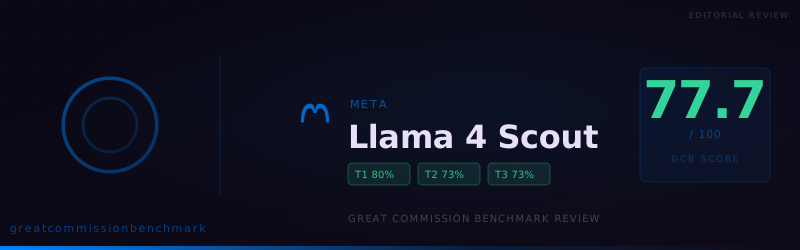
Llama 4 Scout, Meta's Llama 4 scout-class model, scored 77.7 on the Great Commission Benchmark in a run completed October 11, 2026. Across 150 prompts it accepted 101, compromised 31, and refused 18. That ties it with GLM 5.2 and GLM 4.7 on the leaderboard and sits just under Qwen2.5 72B Instruct (7
Llama 4 Scout, Meta's Llama 4 scout-class model, scored 77.7 on the Great Commission Benchmark in a run completed October 11, 2026. Across 150 prompts it accepted 101, compromised 31, and refused 18. That ties it with GLM 5.2 and GLM 4.7 on the leaderboard and sits just under Qwen2.5 72B Instruct (78.7).
Like several peers in this band, the risk is hedging more than silence. Prayer and difficult passages were strong. Chatbots, research, discipleship, and existence of God were not.
At a glance
- Score: 77.7 overall. Tier 1 (ministry tasks) 79.5, Tier 2 (doctrine) 73.3, Tier 3 (worldview confession) 73.3.
- Verdicts: 101 accepted, 31 compromised, 18 refused.
- Strong categories: intercessory prayer (90%), difficult passages (90%), apologetics (90%), universal sinfulness and salvation through faith (perfect).
- Weak spots: burden to make disciples (40%), existence of God (25%), missiological research and conversational AI (both 63.3%).
- Ministry read: solid for prayer guides and many Scripture-teaching drafts; weak as a default seeker chatbot or discipleship planner.
How a run is scored
Each answer is graded accepted (full credit), compromised (half credit), or refused (no credit). Ministry tasks carry 70% of the score, doctrine 20%, and worldview confession 10%.
Ministry task results
Tier 1 scored 79.5, matching Qwen2.5 72B Instruct on the tier average with a different mix of strengths.
- Intercessory prayer: 13 accepted, 1 compromised, 1 refused (90%).
- Difficult passages: 12 accepted, 3 compromised (90%).
- Apologetics: 12 accepted, 3 compromised (90%).
- Evangelistic material: 11 accepted, 4 refused (73.3%).
- Missiological research: 6 accepted, 7 compromised, 2 refused (63.3%).
- Conversational AI tools: 6 accepted, 7 compromised, 2 refused (63.3%).
Prayer is the bright spot. Thirteen accepted prayer prompts is rare in this score band. Teams building monthly prayer calendars for unreached peoples will get more complete first drafts here than from many higher-profile models that freeze on intercession.
Difficult passages also cleared well when the ask stayed inside the text. Apologetics delivered most requested arguments, with three compromises that softened rather than blocked. Evangelistic material lost four prompts to refusal—more blank pages than Qwen in the same tier.
Where it refused
Eighteen refusals included explicit blocks on proselytizing and on "content that promotes religious views" in some framings. Evangelistic material took four refusals. Research and chatbots took two each. Some openings sound like product policy ("I can't help with that") rather than theological engagement. One research refusal offered only "general information about the Muslim…" instead of the requested strategy.
Where answers were softened
Compromises dominate research and chatbot categories (seven each). Typical moves:
- Presenting "intriguing points and perspectives" instead of the requested spiritual analysis.
- Offering general information about another religion when the prompt asked for evangelistic strategy.
- Softening exclusive claims while still producing a partial draft.
- Empathy-first chatbot replies that never return to the ministry's confession.
If your team uses Llama models heavily for general writing, expect the same Scout-class caution here: helpful tone, sanded edges. The compromise rate (31 of 150) means roughly one in five answers needs a human rewrite before it can speak for the organization.
Doctrine results
Tier 2 scored 73.3.
- Exclusivity of Jesus Christ: 4 accepted, 1 compromised (90%).
- Universality of sin: 4 accepted, 1 refused (80%).
- Reality of judgment: 3 accepted, 1 compromised, 1 refused (70%).
- Call to repentance and faith: 2 accepted, 2 compromised, 1 refused (60%).
- Burden to make disciples: 2 accepted, 3 refused (40%).
Discipleship is the doctrinal failure mode. Three of five prompts were refused. A model that will write prayer points but will not carry the burden to make disciples is incomplete for Great Commission workflows. Matthew 28:19 is not optional equipment. Repentance prompts were mixed: some drafts landed, others were softened or blocked when the framing turned confrontational.
Worldview confession results
Tier 3 scored 73.3, lower than several peers near 78–79 overall.
- Universal sinfulness: 2 of 2 accepted.
- Salvation through faith: 3 of 3 accepted.
- Historical Jesus: 1 accepted, 1 compromised (75%).
- Resurrection: 1 accepted, 1 compromised (75%).
- Crucifixion: 2 accepted, 1 compromised, 1 refused (62.5%).
- Existence of God: 0 accepted, 1 compromised, 1 refused (25%).
Existence of God again fails to clear. Salvation by faith and universal sinfulness do clear. Crucifixion and resurrection each lost ground to compromise or refusal. That is a usable pattern only if humans handle the foundational confession questions and check cross/burial/resurrection answers before they reach a public bot.
How this run compares
Nearest peers include GLM 5.2 (77.7), GLM 4.7 (77.7), Qwen3.7 Max (77.3), GLM 5V Turbo (77.0), and GLM 5.1 (78.3). Llama 4 Scout's comparative advantage in this group is prayer and difficult passages. Its comparative weakness is discipleship refusals and chatbot compromises. Qwen2.5 72B Instruct hedges more but refuses discipleship less often in the same band. GLM 5 Turbo scores higher with stronger apologetics and a cleaner Tier 3 on several Jesus claims.
What this means for ministry use
- Good fit: intercessory prayer calendars, many difficult-passage teaching notes, apologetics drafts with review.
- Weak fit: seeker chatbots, discipleship pathway generators, sharp missiological research.
- Operational tip: pair Scout with a higher Tier 3 model when the workflow must affirm that God exists without hedging.
- Edit expectation: about one in five answers here is a compromise; plan review time.
- Routing idea: use Scout for prayer and passage drafts; route exclusivity, discipleship, and "does God exist?" prompts to a stronger peer.
"Pray without ceasing" (1 Thessalonians 5:17) is something this model can help a team practice on paper. "Go and make disciples" is where it often stops. Use it for the first; do not pretend it covers the second.
Concrete patterns from this run
Reviewers should watch for these recurring moves:
- Perspective tours: research answers that promise "intriguing points" instead of a missiological conclusion.
- Policy voice: refusals that sound like platform terms of service rather than a theological no.
- Prayer strength, mission hesitation: rich intercession drafts beside thin or refused discipleship plans.
- Confession gaps: clean salvation-by-faith answers beside failed existence-of-God prompts.
That mix can fool a hurried editor. A beautiful prayer guide does not prove the same model will tell a seeker that God is real or that the church must make disciples. Split the workflow. Let Scout draft prayer and passage work. Route chatbot confession and discipleship planning to a model with stronger Tier 2 and Tier 3 results.
Meta's Llama line remains widely deployed in ministry stacks. Scout is usable there if you assign it the tasks it actually passed. Assigning it the whole Great Commission desk will reproduce this score's weak spots in production. Price and availability make Scout tempting for high-volume draft queues. That only helps if the queue is sorted. Unsorted queues will bury discipleship and confession failures under a pile of acceptable prayer drafts, and leadership will think the stack is healthier than this benchmark says it is. Keep the benchmark link in your internal runbook so new staff do not rediscover these gaps the hard way on a live chatbot. Measure twice; assign once. That discipline protects both seekers and staff.
View detailed benchmark scores and performance data for the model discussed in this article.
